The Truth About Unstructured Citations and Why Your Map Pin Is Stuck
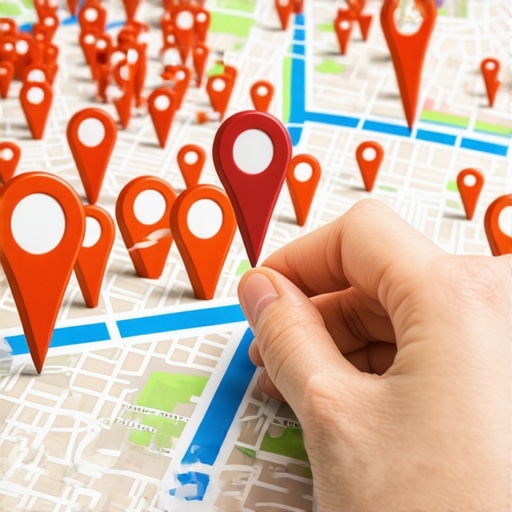
You’ve done everything the “gurus” told you to do. You claimed your Google Business Profile (GBP), you meticulously filled out your Name, Address, and Phone number (NAP), and you spent weeks building listings on Yelp, Yellow Pages, and every obscure directory you could find. Yet, when you check your rankings, your map pin is stuck in the same spot – or worse, it’s invisible unless you’re standing in your own parking lot. This is the “stuck pin” phenomenon, a common frustration for business owners who are following an outdated 2018 playbook in a 2026 search environment.
As a Google Business Profile Product Expert, I see this daily. The reality is that traditional, structured citations are now merely the “entry fee” for local search. They no longer provide the competitive edge needed to rank Google Business Profile assets in high-competition markets. The missing link? Unstructured citations. In this guide, we will dive deep into why your current strategy is failing and how leveraging unstructured data can finally move your pin to the top of the Local Pack.
Before you spend another dollar on outdated tactics, you must understand that Stop Buying Cheap Local SEO Services That Tank Your Profile Impressions is the first step toward genuine recovery. Now, let’s look at the mechanics of why your pin isn’t moving.
The Anatomy of a “Stuck” Map Pin: Why Proximity Isn’t Enough
For years, the Local Pack algorithm was dominated by one primary factor: Proximity. If you were the closest business to the searcher, you usually won the top spot. However, Google’s algorithm has evolved significantly. Today, the three pillars of local SEO – Proximity, Relevance, and Prominence – are weighted differently, with Prominence taking a massive lead in 2026.
Being the “closest” business is no longer a guarantee of ranking. In fact, data shows that Google will frequently bypass a business that is 0.5 miles away to show a business 3 miles away if that further business has stronger prominence signals. This is often referred to as “proximity filtering.” If your business lacks the necessary digital authority, Google views you as a “weak entity,” effectively pinning you to a tiny radius around your physical office.
This is where many businesses fail. They assume that because they are physically located in a city, they should rank for that city. But without “entity validation,” Google’s AI doesn’t trust your relevance to the searcher’s intent. To understand this deeper, you should read our breakdown on Proximity vs Prominence: Why Being the Closest Business Isn’t Enough. When your pin is stuck, it’s usually because your “Prominence” score is too low to overcome the “Proximity” filter. You are essentially being out-shouted by competitors who have built a more robust digital footprint beyond simple directory listings.
Structured vs. Unstructured Citations: The 2026 Distinction
To fix a stuck pin, you must understand the difference between the two types of citations. Structured Citations are what most people think of when they hear “local SEO.” These are mentions of your business in a structured format (NAP) on business directories like Yelp, Angie’s List, or Facebook. While these are important for establishing a baseline of consistency, their value has plateaued. They are easy to manipulate and easy for competitors to replicate.
Unstructured Citations, on the other hand, are the new gold standard for google business profile seo. These are mentions of your business information on websites that are not traditional directories. Think of a mention in a local news article, a feature on a community blog, a shout-out from a local charity you sponsored, or a detailed review on a niche-specific publication. These citations are harder to get, which is exactly why Google values them so highly.
According to Rocket Clicks research, 87% of potential clients begin their search online, particularly in the legal and local service sectors. These users aren’t just looking for a phone number; they are looking for social proof and authority. When Google’s crawlers find your business mentioned naturally within the content of a high-authority local site, it sends a powerful signal that your business is a pillar of the community. This is a core component of google business profile optimization. Unlike a directory listing, an unstructured citation provides context, which helps Google’s algorithm understand exactly what you do and where you do it.
Why AI Search Bots and Neural Matching Demand Unstructured Data
The shift toward unstructured data is driven by the rise of AI search bots and “Neural Matching.” Google is no longer just a keyword index; it is a reasoning engine. Platforms like Perplexity, ChatGPT, and Google’s own Gemini use Large Language Models (LLMs) to verify a business’s “entity” status. These AI bots don’t just look at a table of data (like a directory); they read the web like a human does.
If your business is only mentioned in directories, AI bots may struggle to distinguish you from a “ghost kitchen” or a lead-generation site with no physical presence. However, if your business is discussed in a local news story about a community event, the AI connects the dots between your brand name, your location, and your service. This process of “entity validation” is why some businesses rank effortlessly while others struggle. When an AI bot sees multiple unstructured mentions across the web, it gains “confidence” in your business entity.
This is a critical factor in Why AI Search Bots Choose Specific Local Businesses Over Others. By using local seo tools to track how your entity is perceived, you can identify gaps in your unstructured data. In 2026, if you aren’t feeding the AI bots high-quality, contextual mentions of your business, you are essentially invisible to the next generation of search.
The 733% Surge: How Local Pack Ads and Filtering Impact Your Visibility
If you feel like it’s harder to rank than it was a year ago, you’re right. A recent report from PPC Land highlighted a staggering trend: local pack ads surged from 3% to 22% of tracked mobile keywords between late 2025 and early 2026 – a 733% increase. This means that even if you are in the top 3 organic spots, you might be pushed “below the fold” by multiple sponsored pins.
This “ad crowding” makes organic visibility more competitive than ever. To survive this, you cannot rely on a single signal. You need what we call “Signal Stacking.” This involves layering your google maps ranking service efforts with digital PR, localized content, and high-velocity engagement signals. When the map is crowded with ads, Google’s organic algorithm becomes even more selective about which businesses it displays in the remaining spots. It prioritizes businesses that have the strongest “unstructured” backing because those are the businesses users actually want to see.
To combat this surge, you must implement specific tactics to stay relevant. Check out our guide on 3 Signal Stacking Hacks for Quick Google Maps Results in 2026 to learn how to maintain visibility even as Google increases its ad inventory. Without a diversified strategy, your organic pin will continue to be pushed down by deep-pocketed competitors using Local Services Ads (LSAs).
Troubleshooting the “Stuck” Pin: 5 Common Visibility Killers
Even with unstructured citations, your pin can remain stuck if you have underlying technical issues. As a Google Business Profile Product Expert, I’ve identified five “visibility killers” that frequently prevent a gmb ranking service from delivering results:
- Overlapping Categories: Choosing too many or conflicting categories can confuse the algorithm. If you are a “Plumber” but also list “General Contractor” and “HVAC Repair,” Google may struggle to rank you for any of them. Focus on one primary category that matches your most important unstructured mentions.
- Proximity Filtering: If your business is located in a “cluster” (like a medical building with 50 other doctors), Google may filter you out to avoid showing repetitive results. You need a google maps rank tracker from google maps rank tracker to see if you are being filtered.
- Lack of “Neighborhood” Signals: Many businesses optimize for a city name but ignore neighborhood names. Google’s AI loves hyper-local data. Learn Why Neighborhood Names Outperform Generic Keywords for Local Reach.
- Poor Review Velocity and Authenticity: Google is cracking down on fake engagement. In their latest safety report, Google blocked 292 million policy-violating reviews and removed 13 million fake profiles. If your review growth looks unnatural, your pin will be throttled.
- Missing Unstructured Mentions: If your only digital footprint is a few directories and a website, you lack the “Prominence” to rank. This is especially true for Service Area Businesses. If you’re struggling with this, read Why your service area business isn’t showing on maps and how to fix it.
Step-by-Step: Building Unstructured Citations That Actually Move the Pin
Building unstructured citations requires a shift from “data entry” to “digital PR.” You aren’t just filling out forms; you are earning mentions. Here is a practical framework to start moving your pin:
- Local News Outreach: Use services like HARO (Help A Reporter Out) or reach out to local journalists with a unique story about your business. A single mention in a local “Patch” or news site is worth 100 directory listings.
- Community Sponsorships: Sponsor a local Little League team or a 5k run. Ensure the organization links to your site or mentions your business name and city on their “Sponsors” page.
- Guest Posting on Local Blogs: Find bloggers in your city who write about local lifestyle, real estate, or events. Offer to write a helpful article related to your expertise that mentions your business.
- Niche-Specific Mentions: If you are a lawyer, get mentioned on legal blogs. If you are a roofer, look for home improvement sites. These provide the “Relevance” signal Google craves.
For a more detailed roadmap, refer to The No-Fluff Checklist for Dominating Local Map Results Fast. This strategy ensures that your google business profile optimization is backed by real-world authority, making it nearly impossible for Google to ignore your pin.
Conclusion: Reclaiming Your Map Spot in a Generative World
The era of “set it and forget it” local SEO is over. In a world dominated by AI search bots and a 733% increase in local ads, your business cannot afford to rely on basic directory listings. As I often tell my clients in my role as a Google Business Profile Product Expert, “Entity validation through unstructured mentions is now more critical than simple directory listings.”
To move your stuck pin, you must balance your profile with high-quality, unstructured citations that prove your prominence and relevance to Google’s evolving algorithm. It’s time to stop guessing and start using data-driven google maps seo tools to identify exactly where your profile is falling short. Reclaim your spot in the Local Pack by building a digital footprint that AI bots trust and users admire.
About the Author
Samuel Flores Herrera
Map Ranking
Samuel Flores Herrera is a dedicated specialist in the field of map ranking and local search visibility. With a professional background rooted in optimizing digital presence for businesses, Samuel has established himself as a knowledgeable authority within the mapsrankingfasttrack.com community. His academic foundation from the Universidad Regiomontana, A.C., provides him with a structured approach to complex digital marketing challenges. Throughout his career, Samuel has focused on the intricacies of map algorithms, helping businesses improve their local reach and connect with customers more effectively. As a professional with over 500 industry connections, he stays at the forefront of local SEO trends and platform updates. His expertise at mapsrankingfasttrack.com centers on delivering actionable strategies that drive real-world results for local enterprises. Samuel’s approach combines technical precision with a deep understanding of how local search impacts a brand's growth and visibility. He is deeply passionate about empowering business owners and marketers by sharing the tools and insights needed to achieve sustainable success in the competitive landscape of map rankings.
LinkedIn Profile