How Service Area Pros Rank in the 3-Pack Without a Storefront
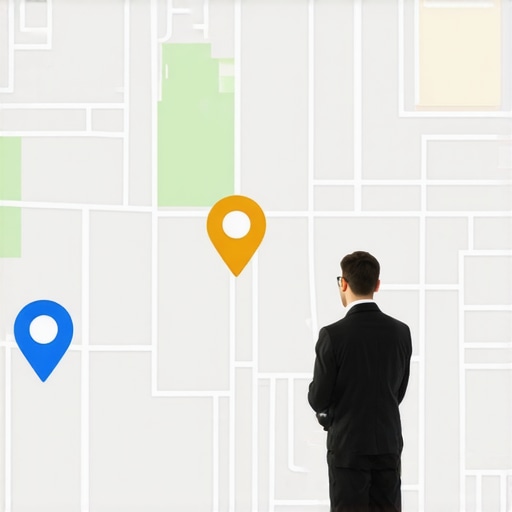
For the modern contractor, the digital landscape often feels like a rigged game. You’re a plumber, an electrician, or a roof restoration expert. You don’t have a retail storefront because your “office” is a kitted-out van and your “showroom” is the customer’s living room. Yet, when you look at the Google Maps 3-Pack, you see competitors with physical offices – sometimes just “executive suites” – occupying the top spots while your business remains invisible. It feels like Google is penalizing you for being mobile.
I’m Shahid Anwar, and I’ve spent years helping Service Area Businesses (SABs) reclaim their territory. The frustration of being “buried” simply because you’ve checked the “I serve customers at their locations” box is real, but it is based on a misunderstanding of the algorithm. Ranking in the 3-pack without a storefront isn’t just a possibility; in 2026, it is a strategic advantage. When you hide your address, you aren’t hiding your business – you are telling Google to evaluate you on relevance and prominence rather than just a physical door. Here is how we turn that “invisible” status into a dominant market position using advanced google business profile seo.
Section 1: The SAB Reality Check: Why Your Address Doesn’t Define Your Rank
The first thing every Service Area Business owner needs to accept is that the “hidden address” is not a handicap. By definition, an SAB is a business that makes on-site visits but does not maintain a location for customers to visit. Google’s internal logic for these businesses is specifically designed to handle this. While storefronts rely heavily on proximity (the distance between the searcher and the shop), SABs are judged more heavily on their service radius and their brand authority.
Google’s algorithm values relevance above all else. If someone in a specific suburb needs an emergency pipe repair, Google wants to show the most reliable plumber who serves that area, not necessarily the one with an office three blocks away that might be closed. The “Hidden Address” mechanic is a signal to Google that your business is mobile. However, many pros fall into The Proximity Myth: Why Nearby Customers Still Can’t Find Your Pin. They assume that if they are physically near a customer, they will show up. In reality, without a visible pin, you must work twice as hard to prove your “Prominence.”
To win, you must stop thinking about your lack of an office and start thinking about your digital footprint. Google determines your rank based on how well your online presence mirrors the real-world service you provide. If you are a top-tier service provider, your profile needs to scream authority to the algorithm.
Section 2: The Foundation: Flawless Profile Setup for 2026
Success starts with the technical configuration of your Google Business Profile (GBP). For SABs, the “Service Area” settings are your most powerful tool. You are allowed to list up to 20 service areas. These can be cities, counties, or specific zip codes. A common mistake is being too broad or too narrow. If you list an entire state, you dilute your relevance. If you list only one zip code, you limit your reach.
The most critical element, however, is your Primary Category. This is the single most influential ranking factor on the map pack. Many businesses pick a category that is “close enough,” but in the world of google business profile optimization, “close enough” is a recipe for failure. You must ensure you haven’t fallen into The Primary Category Trap: Why One Wrong Label Hides Your Pin From Locals. If you are a “Water Damage Restoration Service” but list yourself as a “Plumber,” you are competing in the wrong arena.
Research consistently shows that service area listings act as a direct ranking signal when they are aligned with your website’s content. In 2026, Google’s AI-driven verification processes are stricter than ever. Ensure your service areas don’t extend more than a 2-hour drive from your base of operations, as Google often flags “unrealistic” service boundaries as spam, leading to immediate profile suspension.
Section 3: Proximity vs. Prominence: Beating the “Near Me” Algorithm
In the early days of local SEO, proximity was king. If you were the closest business to the searcher, you won. But the 2026 algorithm has shifted toward “Prominence.” Google now uses “Neural Matching” to understand service intent. This means Google is looking for the best answer to the user’s problem, not just the nearest one.
For an SAB, prominence is built through consistent signals across the web. This includes your reviews, your local citations, and how often your brand is mentioned in local contexts. You need to understand Proximity vs Prominence: Why Being the Closest Business Isn’t Enough. A storefront might have the physical proximity, but you can beat them on prominence by having more relevant, high-quality local data points. Using a professional google maps ranking service can help bridge this gap by accelerating your brand’s local authority signals.
Neural matching allows Google to connect a query like “help my basement is flooding” to a restoration company even if the word “flooding” isn’t in the business name. It looks at your service list, your posts, and your customer feedback to determine if you are the right fit. To beat the “near me” algorithm, your profile must be a comprehensive map of your expertise.
Section 4: The Technical Edge: Schema Markup for the “Storefront-Less”
If you don’t have a physical storefront, your website becomes your “digital office.” This is where technical SEO, specifically JSON-LD Schema Markup, becomes your secret weapon. Schema is a language that tells search engines exactly what your data means. For SABs, the `areaServed` property is the most important piece of code you will ever implement.
By using the `LocalBusiness` or specialized `Service` schema, you can define your coverage area without revealing a home address. You can specify a `GeoShape` with a `circle` or `polygon` radius that matches your GBP service areas. This creates a “data bridge” between your website and your Google profile. Many pros wonder Why Your Local Schema Markup Isn’t Showing Up in Search Results; usually, it’s because the `areaServed` data contradicts the GBP settings.
In addition to area data, include `hasOfferCatalog` to list your services in a way that AI search bots can easily digest. Utilizing local seo tools to audit your schema ensures that there are no “broken links” in the logic you’re presenting to Google. When your website schema and your GBP service areas are in perfect sync, Google’s confidence in your business location increases, leading to higher rankings.
Section 5: Hyper-Local Content: Neighborhood Keywords vs. Generic Cities
Most SABs make the mistake of targeting only major cities. If you are a roofer in Chicago, you are competing with thousands of others. However, if you target “Lincoln Square,” “Logan Square,” or “Hyde Park,” you are playing in a much smaller, more profitable pond. This is the essence of hyper-local content.
Google’s 2026 updates place a heavy emphasis on “neighborhood relevance.” Your website should have dedicated landing pages for every major neighborhood you serve. These pages shouldn’t just swap out the city name; they should include local landmarks, neighborhood-specific issues (like “common roofing problems in historic Hyde Park homes”), and photos of jobs completed in those specific areas. You’ll soon see Why Neighborhood Names Outperform Generic Keywords for Local Reach.
To scale this, use local seo growth tools to identify which neighborhoods have the highest search volume but the lowest competition. By dominating these micro-markets, you build a “cluster” of relevance that eventually pushes your ranking up in the broader city-wide searches as well.
Section 6: Review Management: Building Trust Without a Front Desk
For a storefront, a customer sees a sign, a clean lobby, and a friendly face. For an SAB, your reviews are your lobby. They are the only social proof a customer has before they invite you into their home. But getting reviews as an SAB requires a different strategy. You don’t have a front desk where you can put a QR code; you have to strike while the iron is hot.
The best time to get a review is immediately after the job is finished, while you are still standing in the customer’s driveway. You need to know How to Get 5-Star Google Reviews Before Your Customers Walk Out the Door. Encourage customers to mention the specific service and the neighborhood. A review that says “Best HVAC repair in North End” is worth ten reviews that just say “Great job.”
Google’s algorithm scans reviews for these “justification” keywords. If multiple people mention your “emergency furnace repair” in a specific town, Google will start showing your profile for those specific queries. To stay ahead of the competition, you must constantly improve google maps rankings by maintaining a steady stream of fresh, keyword-rich reviews. Avoid “review gating” (only asking happy customers), as Google’s AI can now detect these patterns and may penalize your profile.
Section 7: Future-Proofing: Generative Engine Optimization (GEO) & AI Search
As we move deeper into 2026, the way people search is changing. We are moving from “Search Engine Optimization” to “Generative Engine Optimization” (GEO). Users are asking Perplexity, Gemini, and ChatGPT for recommendations: “Which plumber in Westside has the best reputation for fixing old copper pipes?”
AI search bots don’t just look at ranking factors; they look for clarity and “answerability.” Your GBP and website must be structured to answer these complex queries. This involves having a robust FAQ section on your profile and ensuring your service descriptions are detailed. Check out The Generative Engine Optimization Guide for 2026 That Actually Works to understand how to feed these AI models the right data.
SABs that provide clear, authoritative content will be the ones recommended by AI assistants. This is the new frontier of local search, where being the “best” is determined by the depth of information you provide online, not just the number of citations you have.
Section 8: Troubleshooting: What to Do When Your Pin Vanishes
The biggest fear for any SAB is the dreaded “Profile Suspended” notification. Because SABs often operate out of home offices or shared spaces, Google is much more likely to trigger a verification check. If your pin vanishes or your rankings drop overnight, don’t panic. There is usually a logical reason, often related to a conflict in your service area data or a suspected “spammy” name change.
If you find yourself in this situation, refer to my guide on Why your service area business isn’t showing on maps and how to fix it. Reinstatement is a delicate process that requires proving your business’s legitimacy through utility bills, vehicle wraps, and official registrations. Keeping your data consistent across all platforms is the best way to prevent these issues before they start.
Conclusion & CTA
Ranking in the Google Maps 3-Pack without a storefront is not a matter of luck; it’s a matter of signals. By mastering your profile setup, dominating neighborhood-level content, and leveraging technical schema, you can outshine competitors who have ten times your overhead. Remember, Google doesn’t care if you have a fancy office; it cares if you are the most prominent and relevant solution for the user’s problem.
The digital landscape of 2026 is competitive, but it’s also full of opportunity for those who know how to navigate the algorithm. Don’t let your business stay “invisible.” Start auditing your profile today, focus on building your prominence, and use the right local seo ranking tools to track your progress and stay ahead of the curve. Your next big contract is searching for you right now – make sure they can find you.