3 Specific Tactics That Turn Map Impressions Into Actual Foot Traffic
You’ve seen the dashboard. Your impressions are up, the “discovery” numbers look healthy, and you are finally appearing in the coveted Local Pack. But there is a nagging problem: the phone isn’t ringing as often as the data suggests it should, and the “ding” of the front door sensor is far too infrequent. This is the Impression Gap – the disconnect between being seen on a screen and being visited in person.
In the world of google business profile seo, ranking is only the first half of the battle. The second half is conversion. As we move into a more sophisticated search landscape, simply showing up is no longer a guarantee of revenue. You need to bridge the friction between a click and a visit. If you aren’t converting those views, you are essentially providing free market research for your competitors who are closing the deal.
Section 1: The “Impression Gap” – Why Ranking Isn’t Enough
For years, the gold standard of local SEO was “ranking in the top 3.” While that remains a primary goal, the nature of how users interact with Google Maps has shifted. We are now in the era of the “Zero-Click Search,” where users find everything they need – hours, reviews, photos, and even menus – without ever visiting your actual website. If your profile doesn’t compel them to take the next physical step, that impression is a wasted opportunity.
Many businesses suffer from what I call “Passive Visibility.” They have optimized for keywords, but they haven’t optimized for intent. When a user sees your business on a map, they are making a split-second judgment. They are looking for reasons to trust you, reasons to choose you over the business one block closer, and reasons to believe that the experience they see online will match the reality of your storefront. Failing to address these psychological triggers leads to The Friction Points Killing Your Google Business Profile Conversions.
To turn those digital eyeballs into physical foot traffic, you must move beyond basic google business profile optimization. You need a conversion-centric strategy that leverages visual trust, conversational authority, and hyper-local signal syncing. Let’s dive into the three specific tactics that will help you rank higher on google maps while simultaneously driving more people through your doors.
Section 2: Tactic #1: Visual Trust & “Storefront Signal” Optimization
In 2026, visual content is no longer just about looking “nice.” It is a primary ranking factor and a critical conversion driver. Google’s AI-driven search bots now use computer vision to analyze your images, identifying objects, text on signage, and even the “vibe” of your establishment to determine if you are a relevant match for a user’s query. This is where “Storefront Signal Tactics” come into play.
Moving Beyond Stock Photos
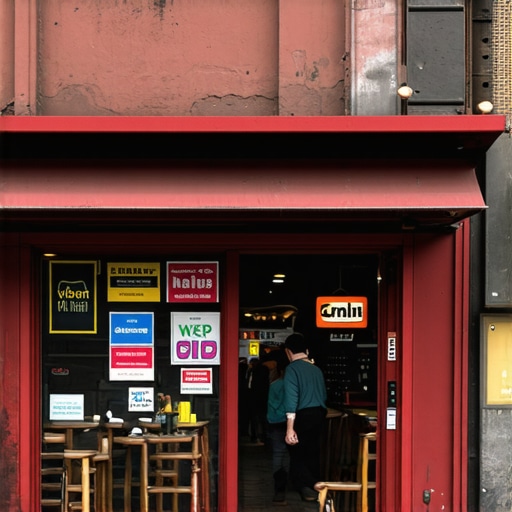
If your profile is still relying on stock photography or a single, blurry photo of your building from five years ago, you are bleeding customers. Users want to see the current reality. High-resolution, recent photos of your storefront, the interior, and your staff serve as a “Proof of Life” signal. It tells the customer, “We are open, we are professional, and we look exactly like this.”
The Rise of Visual Search Fixes
As AI becomes more integrated into the map experience, “Visual Search” is becoming a dominant way people find businesses. When someone searches for “outdoor patio dining with heat lamps,” Google isn’t just looking at your text descriptions; it’s scanning your photos for those heat lamps. To stay ahead, you need to implement 5 Visual Search Fixes for Quick Google Maps Results in 2026. This includes geotagging your images (though Google extracts this data automatically, maintaining original metadata helps) and ensuring your “Attributes” in the back end match the visual evidence in your gallery.
Leveraging User-Generated Content (UGC)
A photo taken by a customer is worth ten photos taken by a professional photographer in the eyes of a modern consumer. UGC provides “social proof” that cannot be faked. Encourage your customers to upload photos of their experience. Not only does this provide fresh content for Google to index, but it also creates a sense of community and authenticity that drives foot traffic. When a potential customer sees a photo of a happy patron in your shop from “2 days ago,” the psychological barrier to visiting drops significantly. This is a core component of effective google maps optimization.
- Action Item: Audit your current photo gallery. Remove any stock images and replace them with high-quality, real-time shots of your business in action.
- Pro Tip: Use the “Updates” feature to post weekly “behind-the-scenes” photos. This keeps your profile active and signals to Google that you are a highly engaged business.
Section 3: Tactic #2: Conversational Authority, FAQs & AI-Ready Answers
The way people “search” is changing from short keywords to full questions. With the rise of AI search engines like Perplexity, ChatGPT, and Google’s own Gemini, your Google Business Profile (GBP) needs to be more than a directory listing – it needs to be a knowledge base. To capture “Zero-Click” searches and turn them into visits, you must establish conversational authority.
Writing for AI Search Bots
AI bots are looking for structured data and clear, concise answers to user questions. If a user asks their phone, “Which hardware store near me has 12-foot ladders in stock?” Google will scan your FAQs, your reviews, and your “Products” section. If you haven’t explicitly answered that question, you lose the lead. This is why many Small Businesses Are Getting Their FAQs Cited in AI Search Answers by being proactive with their Q&A section.
The “AI Verification” Tactic
To ensure your business is cited in AI-generated map summaries, you need to use specific, natural language in your profile. Instead of just listing “Plumbing Services,” use phrases like “We provide emergency 24-hour plumbing repair in the North End neighborhood.” This level of detail helps AI engines verify your expertise and location, making them more likely to recommend you as a “Top Pick.”
Reducing Friction with Google Business Messaging
Sometimes, the only thing standing between an impression and a foot visit is a simple question: “Is there parking nearby?” or “Do you have a gluten-free menu?” By enabling Google Business Messaging, you allow customers to get these answers instantly. In 2026, the speed of response is a major competitive advantage. If you can answer a customer’s question in under three minutes while they are still looking at the map, the chances of them driving to your location increase by over 60%.
Using local seo tools can help you monitor these interactions and ensure you never miss a lead. Remember, the goal is to make the transition from “searching” to “visiting” as seamless as possible. If you are looking for a gmb ranking service, ensure they prioritize these conversational elements rather than just backlink building.
Section 4: Tactic #3: Hyper-Local Signal Syncing & Attribution
The third tactic involves a technical shift in how you handle your location data. For a long time, businesses focused on “City + Keyword” (e.g., “Dentist Chicago”). However, Google’s “Neural Matching” and “Proximity” algorithms have become incredibly precise. Today, generic city names are often too broad. To dominate, you need to master the “Neighborhood Keyword Strategy.”
The Neighborhood Keyword Strategy
People don’t just shop in cities; they shop in neighborhoods, districts, and near specific landmarks. By incorporating these hyper-local terms into your profile and your website’s local landing pages, you signal to Google that you are the most relevant result for someone standing exactly in that area. This is The Neighborhood Keyword Strategy That Beats Big Brands in Local Search. While a massive national chain might target “Los Angeles,” your local boutique can target “Silver Lake” and “Echo Park,” winning the local pack every time for those specific users.
Case Study: The Power of Store Visit Attribution
Understanding the link between online search and offline visits is crucial. Take the case of Kelsan, an industrial cleaning retailer. They used Google’s Store Visit conversions to prove that their digital presence was directly driving foot traffic to their locations in Nashville and Charlotte. By linking their Google Business Profile directly to their Ads Data Manager and tracking “Store Visit” metrics, they were able to optimize their spend toward the specific neighborhoods and keywords that actually resulted in people walking through the door.
Similarly, a mid-sized restaurant chain in Singapore saw a massive increase in physical visits by tracking “Engagement on Maps.” They didn’t just look at how many people saw their pin; they looked at how many people interacted with the pin, viewed the menu, and then requested directions. This data allowed them to see that their “Map Impressions” were actually high-intent leads, leading them to invest more in a google maps ranking service that focused on engagement rather than just visibility.
Syncing Data to Prevent “Rank Lag”
If you have multiple locations, “Rank Lag” can occur when your data is inconsistent across different platforms. Ensure your Name, Address, and Phone Number (NAP) are identical across your GBP, your website, and local directories. Furthermore, avoid the common mistake of enabling “Search Partners” in your Maps ads without proper filtering. The most effective 2026 protocol is to link your GBP directly to your Ads Data Manager for clean, actionable attribution data.
By syncing these signals, you ensure that Google trusts your data implicitly. When Google trusts your data, it is more likely to show your business to users who are in the immediate vicinity and ready to buy. This is the ultimate goal of any rank google business profile campaign.
Section 5: Conclusion & The 2026 Local Roadmap
The landscape of local search is no longer a static map; it is a dynamic, AI-driven ecosystem. If you want to turn map impressions into actual foot traffic, you must stop treating your Google Business Profile as a “set it and forget it” directory listing. You must transform it into an “Action-Pack” – a conversion engine that builds trust through visuals, provides answers through AI-ready FAQs, and dominates the local area through neighborhood-specific signals.
To recap, your roadmap for success involves:
- Visuals: Implementing storefront signals and visual search fixes to build immediate trust.
- Conversation: Utilizing Q&A and messaging to satisfy the “Zero-Click” user and AI search bots.
- Hyper-Local: Moving beyond city-wide keywords to dominate your specific neighborhood and tracking real-world attribution.
Don’t let your hard-earned rankings go to waste. If you are seeing high impressions but low conversions, it is time to audit your profile. Stop the leaks in your sales funnel by following The No-Fluff Checklist for Dominating Local Map Results Fast. And remember, Stop Buying Cheap Local SEO Services That Tank Your Profile Impressions; quality and strategy are what drive ROI in the modern era.
If you need the right tools to measure your progress and identify where you’re losing potential customers, consider using professional local seo software. With the right data and these three tactics, you can finally bridge the gap between being “seen” and being “visited.”
For more advanced strategies and tools to help you dominate your local market, visit SEO Viper Tools and start your journey toward actual foot traffic today.
About the Author
Samuel Flores Herrera
Map Ranking
Samuel Flores Herrera is a dedicated specialist in the field of map ranking and local search visibility. With a professional background rooted in optimizing digital presence for businesses, Samuel has established himself as a knowledgeable authority within the mapsrankingfasttrack.com community. His academic foundation from the Universidad Regiomontana, A.C., provides him with a structured approach to complex digital marketing challenges. Throughout his career, Samuel has focused on the intricacies of map algorithms, helping businesses improve their local reach and connect with customers more effectively. As a professional with over 500 industry connections, he stays at the forefront of local SEO trends and platform updates. His expertise at mapsrankingfasttrack.com centers on delivering actionable strategies that drive real-world results for local enterprises. Samuel’s approach combines technical precision with a deep understanding of how local search impacts a brand's growth and visibility. He is deeply passionate about empowering business owners and marketers by sharing the tools and insights needed to achieve sustainable success in the competitive landscape of map rankings.
LinkedIn Profile